A major engineering milestone has been completed on the HS2 programme with the successful launch of a 130-metre steel viaduct across the Grand Union Canal near Ufton in Warwickshire.
The 1.5-mile stretch of canal has now reopened to the public seven days ahead of schedule after engineers successfully slid the 1,620-tonne structure into position using a carefully coordinated launch operation.
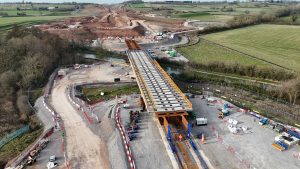
The viaduct structure is supported by two abutments and two piers on either side of the canal. Its installation follows more than two years of preparatory works carried out by engineers working on behalf of HS2’s construction partner Balfour Beatty VINCI.
At peak construction, around 40 people worked on the project. The works included installing 34 deep foundation piles reaching depths of up to 30 metres, constructing two concrete piers cast parallel to the canal to improve the visual experience for canal users, and installing 37 precast planks that form the base of the bridge deck.
Engineers also constructed a new retaining wall along the canal to maintain structural integrity ahead of the bridge installation. Built using seven-metre-deep sheet piles and capped with concrete, the new wall replaces the original wash wall and soft bank that is believed to have been created around a century ago when the canal was widened.
Throughout the project, vibration levels were carefully monitored to protect the nearby Longhole Bridge, which carries road traffic and pedestrians over the canal between Ufton and Hunningham Hill.
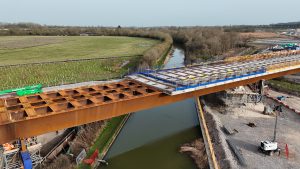
The viaduct sits approximately one kilometre from the north portal of the Long Itchington Wood Tunnel. Once trains emerge from the tunnel, they will travel along the Ufton Wood cutting before joining the Welsh Road embankment and continuing across the new structure.
HS2 Ltd and BBV worked closely with the Canal & River Trust to plan the installation. The launch was scheduled during the canal’s close season to minimise disruption for boaters using this popular waterway.
Construction of HS2 continues between London and the West Midlands, with the programme currently supporting around 30,000 jobs across the country. When complete, services will run on a dedicated high-speed line between London and the West Midlands before continuing to destinations further north.
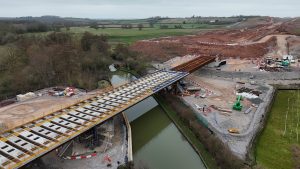
As well as improving long-distance connectivity, the new line will help create additional capacity on the existing West Coast Main Line, enabling more space for regional passenger services and rail freight.
For the High Speed Rail Group, milestones such as this highlight the depth of engineering expertise across the UK rail supply chain and the complex infrastructure delivery capabilities being developed through the HS2 programme.