HS2 is moving into the next major phase of civil engineering on the Curzon approaches, the final mile of the line as it enters Birmingham city centre. This week, engineers start laying the concrete slabs that form solid decks on each of the five interconnected viaducts, ready for track to be laid.
Built in the West Midlands, by a local workforce
The reinforced slabs are made at Balfour Beatty VINCI’s purpose-built factory in Kingsbury, Warwickshire. The 140-strong team there spent four years producing 2,742 segments for the Delta Junction viaducts. The production line has now switched to precision-designed slabs for the Curzon approaches, which keeps that skilled local workforce in employment.
An 18-month journey
A 125-tonne gantry crane has been lifted into place above the Lawley Middleway viaduct. From there it will lay the slabs one at a time, working outwards from the city centre across Lawley Middleway, Curzon 2, Curzon 1 and finally Duddeston Junction viaduct. People passing by road, rail or on foot will be able to watch it move from one structure to the next.
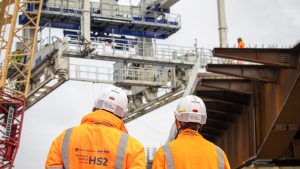
Greg Sugden, HS2 Ltd’s Head of Delivery for the Curzon Approaches, called it “a huge moment” for the team and “essentially the last major phase of civil engineering works” on this section of the route. He said the decks will take around 18 months to lay, after which the elevated approach into Birmingham will be structurally complete.
Malik Kayatas, Section Manager at Balfour Beatty VINCI, said the crane’s progress marks “the next exciting phase of this project”.
Approaching Curzon Street
All five viaducts have made significant progress, and they now trace the route of the railway towards the new terminus at Birmingham Curzon Street.