On 25 June 2026, the High Speed Rail Group welcomed members, policymakers and industry leaders to its Annual Conference, chaired by Natasha Clark, Political Editor at LBC.
Sponsored by Arup, Arcadis and Mott MacDonald – the event brought together representatives from government, local authorities, infrastructure clients, contractors and the wider rail industry, the conference explored how major rail investment can unlock economic growth, deliver new homes and jobs, and create a better-connected national railway.
Delivering Euston
The opening panel examined the future of Euston as both a transport hub and a catalyst for regeneration. Speakers highlighted the unique opportunity to transform the area into a destination where culture, science, innovation and connectivity come together, while also delivering benefits far beyond London.
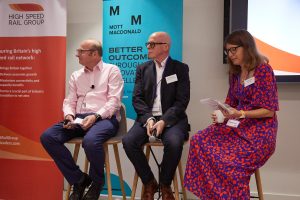

The discussion emphasised that Euston should be viewed as the southern gateway to the Midlands, the North and Scotland, with investment delivering national as well as local benefits. Panellists also recognised the importance of rebuilding trust with communities, businesses and delivery partners following previous uncertainty surrounding the project.
Delegates heard that HS2 is expected to support the delivery of around 63,000 new homes, while driving approximately £10 billion of investment in both the Midlands and the South. The panel also reflected on the importance of maintaining existing rail services while delivering one of the country’s most complex station redevelopments.
Neil Henderson of Mott MacDonald captured the mood of the session, urging the industry to “move from debate to delivery”, while Mike Brown described Euston as “one of the last great opportunities for decent, inclusive development” in London.
The Enduring Legacy of HS2
The second panel explored the lasting value of the skills, expertise and innovation being developed through HS2.
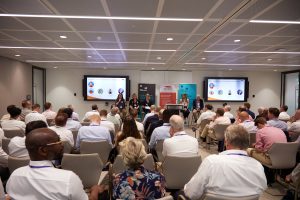
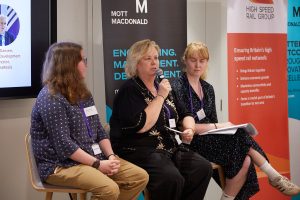
Drawing on experiences from across the supply chain, speakers reflected on how the programme is developing a new generation of engineers, project managers and construction professionals whose expertise will benefit infrastructure projects for decades to come.
The discussion highlighted that many of the project’s greatest achievements are often overlooked in public debate, including the development of new technical capability, improved delivery methods and thousands of apprenticeship opportunities. Delegates heard how perceptions of HS2 are expected to evolve as the railway begins operating and its wider benefits become visible.
The panel concluded that HS2 should not be seen as a standalone project, but as an investment that will raise standards across the wider railway and leave a lasting legacy for the UK’s infrastructure sector.
Government Commitment to Rail Investment
The conference heard from Lord Peter Hendy, Minister of State for Rail, who reaffirmed the Government’s commitment to completing HS2 and delivering wider rail investment across the country.
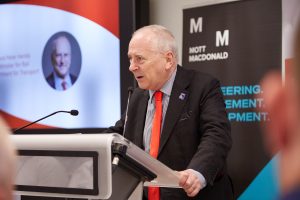
He outlined how the Government’s reset of the programme is creating a stronger relationship with the supply chain while improving delivery. Looking ahead, he emphasised that HS2 will play a central role in increasing capacity across the existing rail network, supporting economic growth and enabling future schemes such as Northern Powerhouse Rail and improved connectivity between Liverpool and Manchester.
His message was clear: investment in rail delivers jobs, homes and economic growth, and remains central to the Government’s long-term ambitions.
Driving Growth Across the North
Tom Riordan, Northern Growth Envoy at HM Treasury, reinforced the importance of transport connectivity as a driver of regional growth.
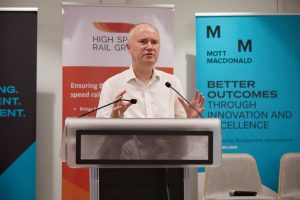
He argued that improved public transport remains one of the biggest constraints on economic performance across the North of England and called for stronger long-term partnerships between government, industry and local leaders. Better rail connectivity, including improved links to cities such as Bradford, was highlighted as essential to unlocking future productivity and opportunity.
Building an Integrated Railway
The afternoon panel focused on creating a truly integrated rail network and ensuring that investment in new infrastructure complements and strengthens the existing railway.
Speakers discussed how HS2 will release capacity on the West Coast Main Line, enabling more frequent passenger services and greater freight capacity. The conversation also explored the importance of giving investors confidence that the UK can consistently deliver major infrastructure projects successfully.

While journey times remain important, panellists agreed that passengers place equal value on reliability, resilience and having sufficient capacity to travel comfortably.
The discussion also considered how government, industry and investors must work together to create a stable pipeline of infrastructure investment capable of supporting long-term economic growth.
Unlocking Growth Through Transport
The conference concluded with a fireside discussion exploring how major transport infrastructure can unlock regeneration and investment.

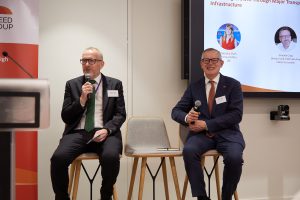
Drawing on experience from both Transport for London’s development programme and major infrastructure delivery, speakers highlighted the long-term relationship between transport investment and place-making. They argued that well-connected transport hubs create opportunities for new housing, improved access to employment and stronger local economies.
Examples from Crossrail demonstrated how sustained investment can stimulate significant private sector confidence, while discussion also focused on ensuring future projects maximise opportunities for communities, businesses and future generations.
Looking Ahead
Throughout the conference, delegates returned to a common theme: major rail infrastructure is about far more than transport.
It creates skilled jobs, supports supply chains, unlocks housing, improves connectivity and enables sustainable economic growth across the UK.
As HSRG continues to champion investment in a fast, high-capacity, well-connected rail network, the conference demonstrated the breadth of support across industry and government for delivering the infrastructure the country needs.
We would like to thank all of our speakers, panellists, sponsors and delegates for contributing to an engaging and thought-provoking event.